
U.S.A.A.F. RESOURCE CENTER > EXPERIMENTAL > PREVIOUS PAGE
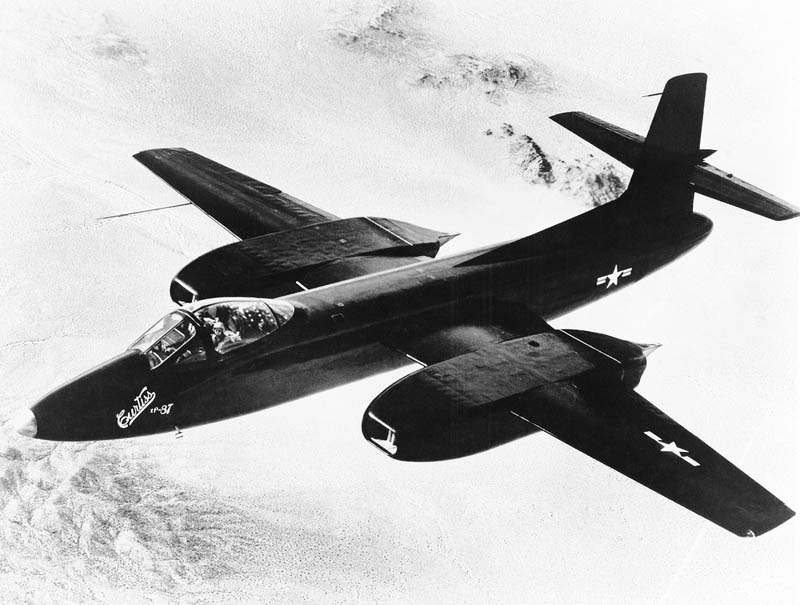
The prototype flew in 1948 followed soon after by the second prototype. However, this was the beginning of the era of rapid jet technology advancement and the performance of the XP-87 was soon surpased. The contract for the Blackhawk was cancelled on Oct. 10, 1948 and soon after the Curtiss Company aviation division was sold to North American Aviation.
|
Type: All-Weather Interceptor Origin: Curtiss Crew: two Model: Model 29A, XA-43, XP-87 First Flight: March 5, 1948 Production: 2 Prototypes Powerplant: Model: Westinghouse J-34-WE-7 Type: Turbojets Number: Four Thrust: 3,000 lb. Dimensions: Wing span: 60 ft. (18.3m) Length: 62 ft. 10 in. (18.9m) Height: 20 ft. 6.2m) Wing Surface Area: 600 sq. ft. (55.7m²) Weights: Empty: 25,930 lbs. (11,760 kg.) Max. Take-Off: 49,900 lbs. (22,600 kg) |
Performance: Maximum Speed: 600 mph (970 kph) Cruising Speed: N/A Service Ceiling: 41,000 ft. (12,500m) Combat Range: 1,000 miles (1,600 km)
Armament: Proposed
XP-87:
Payload: N/A |


USAF Museum, www.wpafb.af.mil/museum/index.htm, 2005.
U.S.A.A.F. RESOURCE CENTER > EXPERIMENTAL > PREVIOUS PAGE