
U.S.A.A.F. RESOURCE CENTER > FIGHTERS > PREVIOUS PAGE
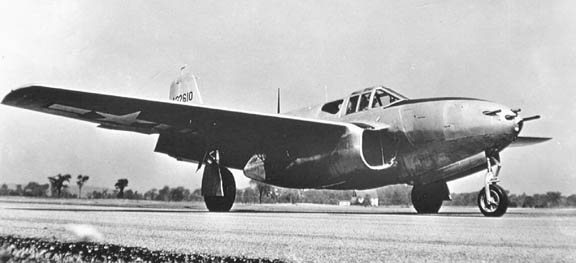
It soon became apparent that the P-59's performance did not exceed the types currently in service but would make an excellent conversion trainer.
| Type: Single
Seat Jet Fighter Trainer Origin: Bell Aircraft Models: YP-59, P-59A and XF2L-1 First Flight: XP-59A: October 1, 1942 P-59A: August 7, 1944 Service Delivery: N/A Final Delivery: N/A Total Produced: 66 Powerplant: Model: General Electric J31-GE-3 Type: Turbojet Number: Two Thrust: 2,000 Lbs. (907 kg) Dimensions: Wing span: 13.87m (45 ft. 6 in.) Length: 11.63m (38 ft. 1.5 in.)* Height: 3.66m (12 ft.) Wing Surface Area: N/A |
Weights: Empty: 7,950 lb. (3610 kg) Maximum: 12,700 lb. (5760 kg) Performance: Maximum Speed: 671km/h (413 mph) Initial climb: N/A Service Ceiling: 46,200 ft. (14,080 kg.) Range: 520 miles (837 km) With two 125 Imperial Gallon Drop Tanks at 289 mph Armament: Usually none but a few YP-59A fitted with nose gun package comprised of a 37mm Cannon and three .50 machine guns. A rack mounted under each wing can handle bombs as well as drop tanks. |
U.S.A.A.F. RESOURCE CENTER > FIGHTERS > PREVIOUS PAGE