![]() ![]() ![]() ![]() |
![]() |
| Type: Carrier based Torpedo bomber, later ASW (anti-submarine warfare) aircraft and AEW (Airborne Early Warning) aircraft Origin: Grumman Aircraft Crew: 3 Models: TBF and TBM series First Flight: XTBF-1: August 1, 1941 Service Delivery: January 30, 1942 Final Delivery (New): September 1945 Final Delivery (Rebuilt): August 1954 Production: N/A Powerplant: Model: Wright R-2600-8 or -20 Double cyclone Type: 14-cylinder dual-row radial engine Number: One Horsepower: 1,700 hp Dimensions: Weights: Performance: Armament: |
![]() Bomb Load: TBF-1 & TBM-1 2,000 lb. (454 kg) of bombs or one 22 in. Torpedo internally TBF-1C, TBM-1C & TBM-3 2,000 lb. (454 kg) of bombs or one 22 in. Torpedo internally Underwing racks for eight 60 lb. (27 kg.) rockets Avionics: Variants: |
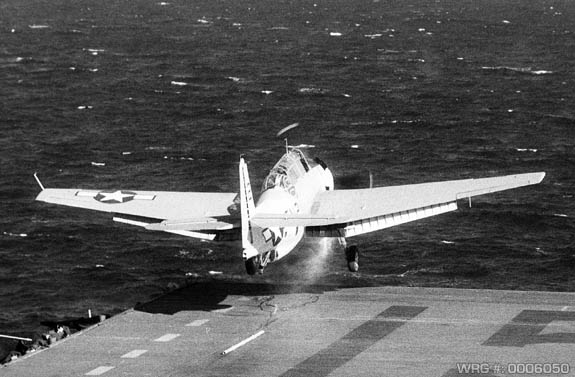
| Comments: Another outstanding design from the Grumman "Ironworks", the Avenger proved to be an extremely versatile design. Large numbers of the types served with the US Navy and fought from the Battle Of Midway onwards. Originally designed as a torpedo bomber, the Avenger proved to be a capable conventional bomber and later served as an ASW (Anti-Submarine Warfare) and AEW (Airborne Early Warning) aircraft and fulfilled these roles well into the mid-fifties. Large numbers of Avengers found postwar roles with the RCN, Aeronavale, Japan and the Netherlands. The Avengers usefulness extended to post-war civilian life. Number of Avengers were modified for use as firebombers by removing the turret and military equipment and installing tanks in the bomb bays. Several of these fire bombers still fill this role today while others have been restored back to there military configuartion and have proved to be popular warbirds. |